
The ENO SURE program has tackled a critical challenge faced by seed producers; the high cost of inspection fees paid to the National Seed Certification Service (NSCS). Previously, individual farmers bore the entire cost of germination rate testing, a financial burden exacerbated by staggered planting schedules. The program identified a practical and collaborative solution by encouraging seed producers to synchronize their planting schedules. This innovative approach has enabled farmers to share inspection costs, significantly improving profitability and streamlining inspections for district agricultural staff, saving both time and resources.
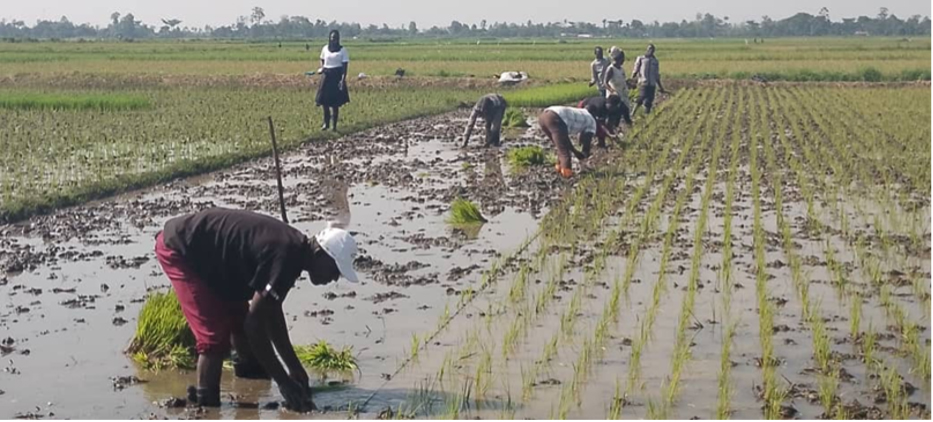
One of the program’s most notable achievements has been the introduction of 30 trained seed producers into the seed entrepreneurship domain of Butaleja district. This initiative has led to the production of an impressive 2.8 tons of certified bean seeds and 15.4 tons of rice Quality Declared Seed (QDS) per season. These certified seeds address a long-standing issue of seed unavailability, a concern frequently raised by farmers during the baseline assessment. By ensuring a steady supply of high-quality seeds, the program is empowering farmers to enhance their productivity and economic outcomes.
A key component of this success is the establishment of four Youth and Women Quality Centers (YWQCs) within the community. These centers serve as hubs for accessing improved seed varieties and vital agricultural information. The 30 youth champions, trained in seed production, Good Agricultural Practices (GAP), and business management, now play a pivotal role in bridging the information gap. Farmers no longer rely solely on district extension staff but can access timely and relevant guidance from these community-based youth champions and the YWQCs.
The next phase of the program should focus on formalizing the YWQCs through registration and certification by the NSCS. Certification will allow the YWQCs to market and distribute certified seeds, significantly reducing transportation costs for farmers who previously relied on distant certified cooperatives. Furthermore, certification will enable the YWQCs to expand their role by selling agro-inputs and advanced farming technologies, creating additional revenue streams and promoting sustainable agribusiness ventures.
Conclusion
This collaborative model of capacity building, resource sharing, and community empowerment highlights a transformative success story in seed entrepreneurship. It exemplifies how strategic interventions, and local leadership can drive agricultural innovation, improve market accessibility, and create lasting economic impact.